
Ladders Are a Top 5 OSHA Citation: The Fixes That Stop Them
Ladders are number 5 on OSHA’s preliminary Top 10 list of most cited standards for fiscal year 2026. The rule is 29 CFR 1926.1053. Most of the citations come from the same few mistakes. Each one has a simple fix.
If your crew is new to ladders, start with our portable ladder safety course. Our free ladder safety guide covers the rule itself.
When you need a ladder or stairs at all
OSHA’s construction rule says you need a stairway or ladder at every point where workers go up or down 19 inches or more, unless a ramp, runway or personnel hoist is there.
Mistake 1: The ladder does not reach high enough
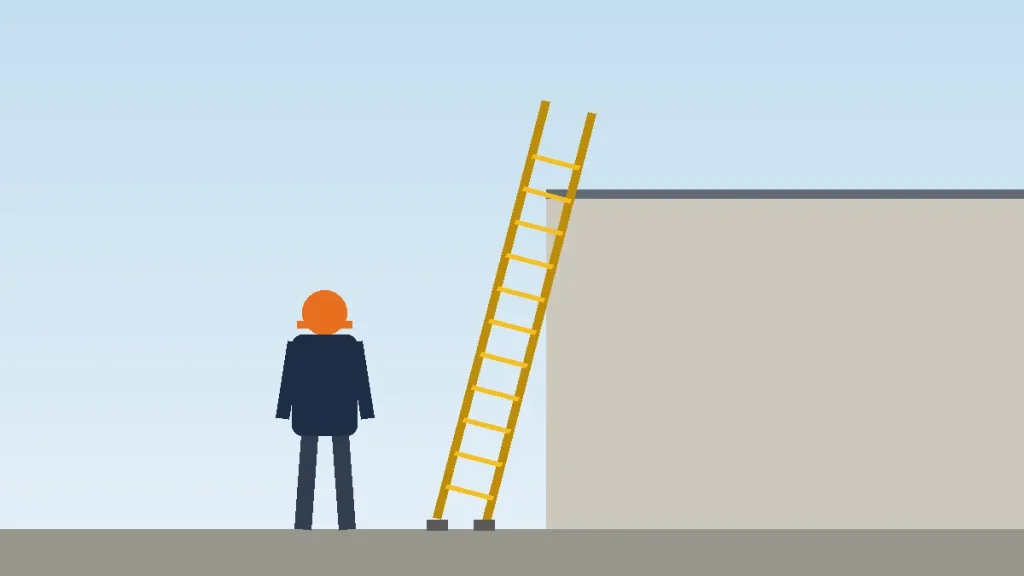
When a portable ladder is used to get onto a roof or upper level, the side rails must stick up at least 3 feet above the landing. If the ladder is too short for that, it must be tied off at the top and a grasping device, like a grabrail, must be there to help the worker on and off.
Fix: Pick the ladder length for the job before the job starts. Check the 3 feet on every setup.
Mistake 2: Standing on the top step
The top or top step of a stepladder may not be used as a step.
Fix: If a worker has to stand on the top step to reach, get a taller ladder or a lift.
Mistake 3: Wrong angle or bad footing
A ladder that leans on a wall should be set so the foot is out about one-quarter of the working length. For a 16-foot working length, that is about 4 feet out. Ladders go on stable, level ground unless they are secured so they cannot move.
Fix: Use the 4-to-1 rule. Tie off or have someone hold the ladder when the ground is soft or slick.
Need your crew trained on this? Our Portable Ladder Safety for Construction Workers course covers setup, angle, inspection and climbing. It is part of The Dojo, our full course library.
Mistake 4: Using a damaged ladder
Ladders must be checked by a competent person for visible defects on a regular basis and after anything that could damage them. A ladder with a defect must be marked “Do Not Use” or tagged, and taken out of service until it is fixed.
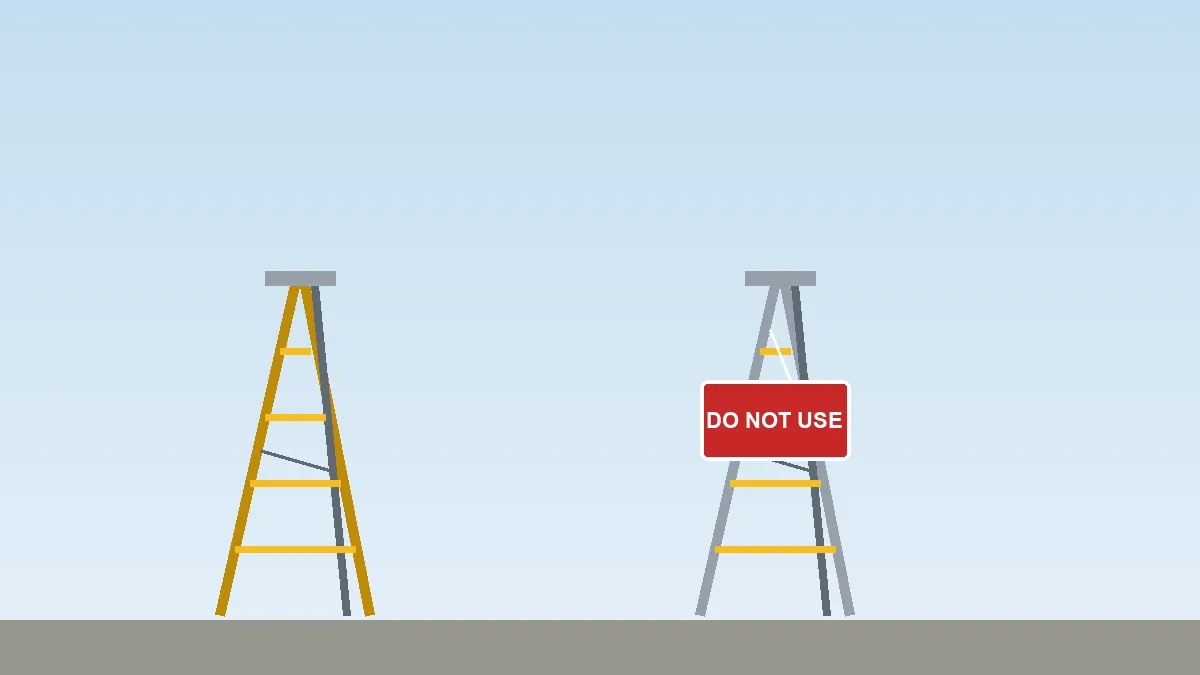
Fix: Keep red tags in the gang box. Use our ladder inspection checklist on every walk.
Mistake 5: Metal ladders near power
Ladders need nonconductive side rails when the worker or the ladder could touch exposed energized electrical equipment.
Fix: Use fiberglass ladders for electrical work. Keep aluminum ladders away from overhead lines.
Mistake 6: Climbing the wrong way
Workers must face the ladder when going up or down and keep at least one hand on it. Carrying a load that could make them lose balance is not allowed.
Fix: Use a tool belt or a hand line to raise tools and material.
Train once, cut citations
A trained crew catches these mistakes before an inspector does. Start the Portable Ladder Safety course or train your whole team.
About this post
This post is a plain-language aid, not a copy of the rule. Black Belt Safety is not part of OSHA. The regulation text is what counts.
Sources
- Top 10 Most Frequently Cited Standards – Occupational Safety and Health Administration, checked 2026-10-18
- 29 CFR 1926.1053 Ladders – eCFR, National Archives, checked 2026-10-18
- 29 CFR 1926.1051 General requirements (stairways and ladders) – eCFR, National Archives, checked 2026-10-18
Frequently asked questions
How far must a ladder extend above the landing?
At least 3 feet above the upper landing surface when used to reach an upper level.
Can you stand on the top step of a stepladder?
No. The top or top step of a stepladder may not be used as a step.
What angle should a leaning ladder be set at?
Set the foot out about one-quarter of the working length, the 4-to-1 rule.
What do you do with a damaged ladder?
Mark it Do Not Use or tag it, and take it out of service until it is fixed.