
Fall Protection Is OSHA’s No. 1 Citation: 5 Fixes Before an Inspector Shows Up
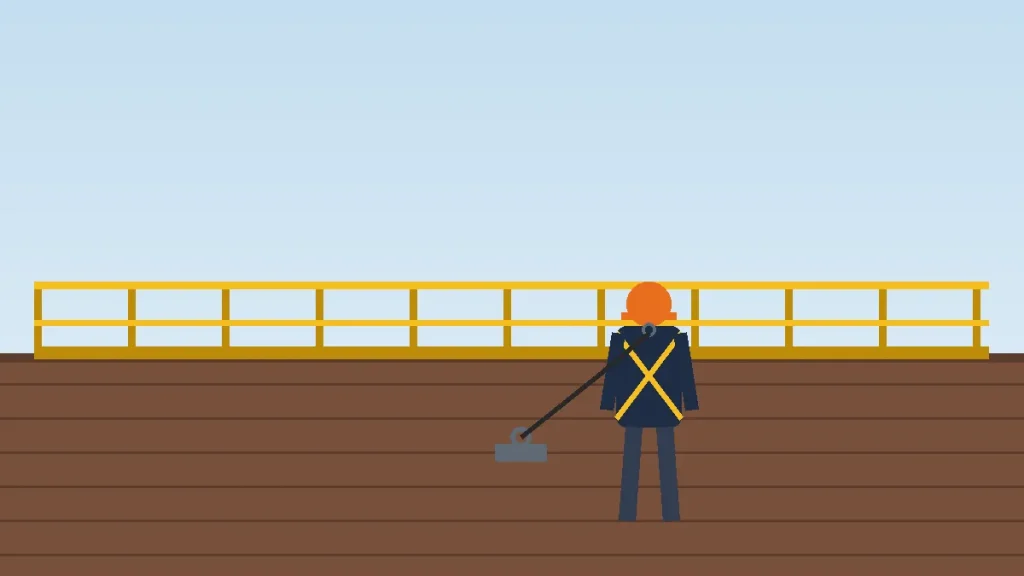
OSHA keeps a list of the rules it cites most. Fall protection in construction is at the top. OSHA’s early list for fiscal year 2026 puts the main fall protection rule in first place. Fall protection training is on the list too, in eighth place.
This post shows what gets cited and five fixes you can make this week.
Two fall rules made OSHA’s top 10
OSHA’s early list for fiscal year 2026 covers October 1, 2025 to August 31, 2026:
| Place | Rule | What it covers |
|---|---|---|
| 1 | 1926.501 | When construction workers need fall protection |
| 8 | 1926.503 | Fall protection training |
Ladders (1926.1053) and scaffolds (1926.451) are on the list too. Those are falls as well, under other rules.
What it costs
Our own count of public Department of Labor records found 5,831 citations under 1926.501 in the 12 months to October 16, 2026. They carried $31.7 million in current penalties. No other rule came close. The training rule, 1926.503, drew 2,291 citations.
OSHA’s top fine is $16,550 for each serious violation. It is $165,514 for each willful or repeated one. One roof with three open sides can mean three separate citations.
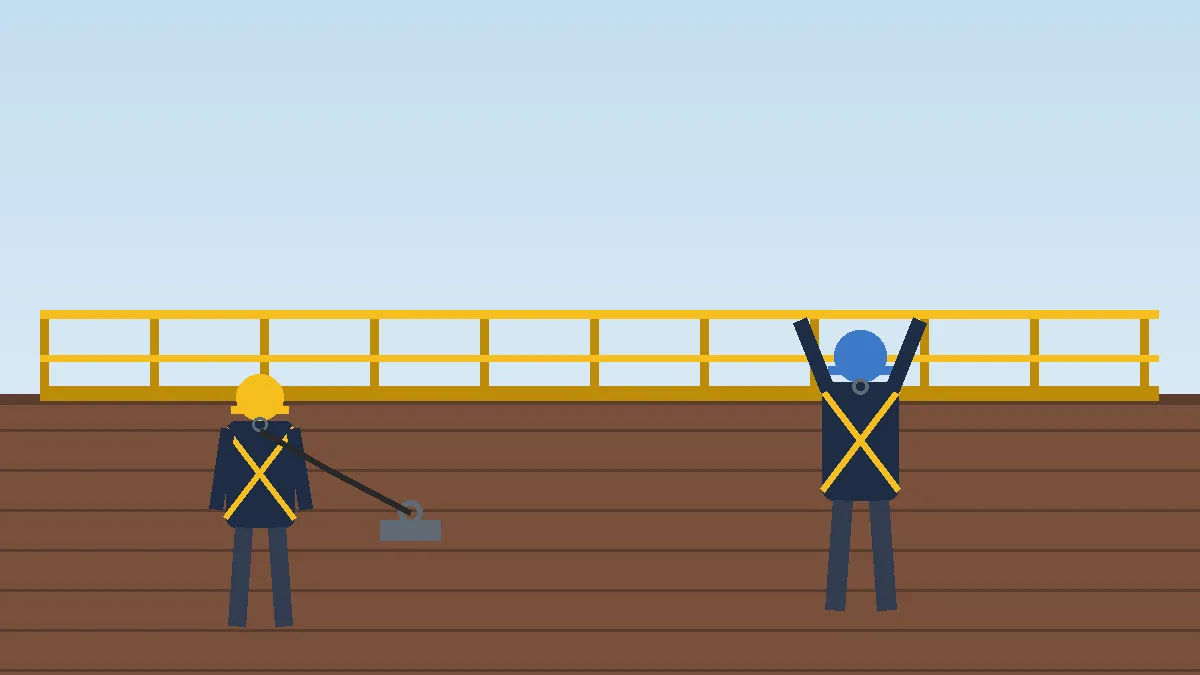
5 fixes before an inspector shows up
- Find every edge at 6 feet or more. In construction, workers need protection at 6 feet or more above a lower level. Walk the site. Look at roof edges, floor holes, open sides and leading edges.
- Pick a system for each edge. The rule allows guardrails, safety nets or personal fall arrest systems for most work. Write down which one each area uses.
- Check your guardrails. The top rail sits at 42 inches, plus or minus 3 inches. It must hold at least 200 pounds pushed outward or downward.
- Check harness gear before each use. The rule says personal fall arrest gear is inspected prior to each use. Each anchor needs to hold 5,000 pounds per worker, or be part of a system a qualified person designed. Set it up so no one can free fall more than 6 feet. Have a plan for prompt rescue after a fall.
- Fix your training records. Training must come from a competent person. The rule asks for a written certification record for each worker. Retrain when the job changes, the gear changes, or a worker shows they did not learn it.
Need the training part done right? Our Fall Protection for Competent Persons course covers the 6-foot rule, the systems, inspections and the training record. It is part of The Dojo, our full course library.
Read the full rule in plain words
This post covers the fixes. Our free fall protection guide explains all of Subpart M in plain words, with a quiz. Our monthly OSHA enforcement report tracks the numbers each month.
Train the whole crew
The training rule is the easiest citation to avoid. The record is on paper, and an inspector can ask for it on day one.
Start the fall protection course or train your whole team.
About this data
OSHA’s fiscal year 2026 list is early and can still change. Our citation and penalty counts come from a nightly copy of public Department of Labor records. Penalties change when cases settle. Black Belt Safety is not part of OSHA or the Department of Labor. This is a plain-language summary, and the regulation text is what counts.
Sources
- Top 10 Most Frequently Cited Standards – Occupational Safety and Health Administration, checked 2026-10-16 (preliminary FY 2026, updated 10/5/26)
- 29 CFR 1926 Subpart M (1926.500-1926.503) – eCFR, National Archives, checked 2026-10-16
- OSHA Penalties – Occupational Safety and Health Administration, checked 2026-10-16
- U.S. Department of Labor Open Data Portal (OSHA enforcement data) – U.S. Department of Labor, checked 2026-10-16; figures from Black Belt Safety’s nightly copy, 12 months to 2026-10-16
Frequently asked questions
What is OSHA's most cited standard?
OSHA's early list for fiscal year 2026 puts fall protection in construction (1926.501) in first place.
How much can an OSHA fall protection citation cost?
OSHA's top fine is $16,550 for each serious violation and $165,514 for each willful or repeated one.
What height requires fall protection in construction?
Workers need protection at 6 feet or more above a lower level, using guardrails, safety nets or personal fall arrest systems for most work.
What fall protection training record does OSHA require?
Training must come from a competent person, and the rule asks for a written certification record for each worker.