Machine Guarding for Operators and Maintenance Workers
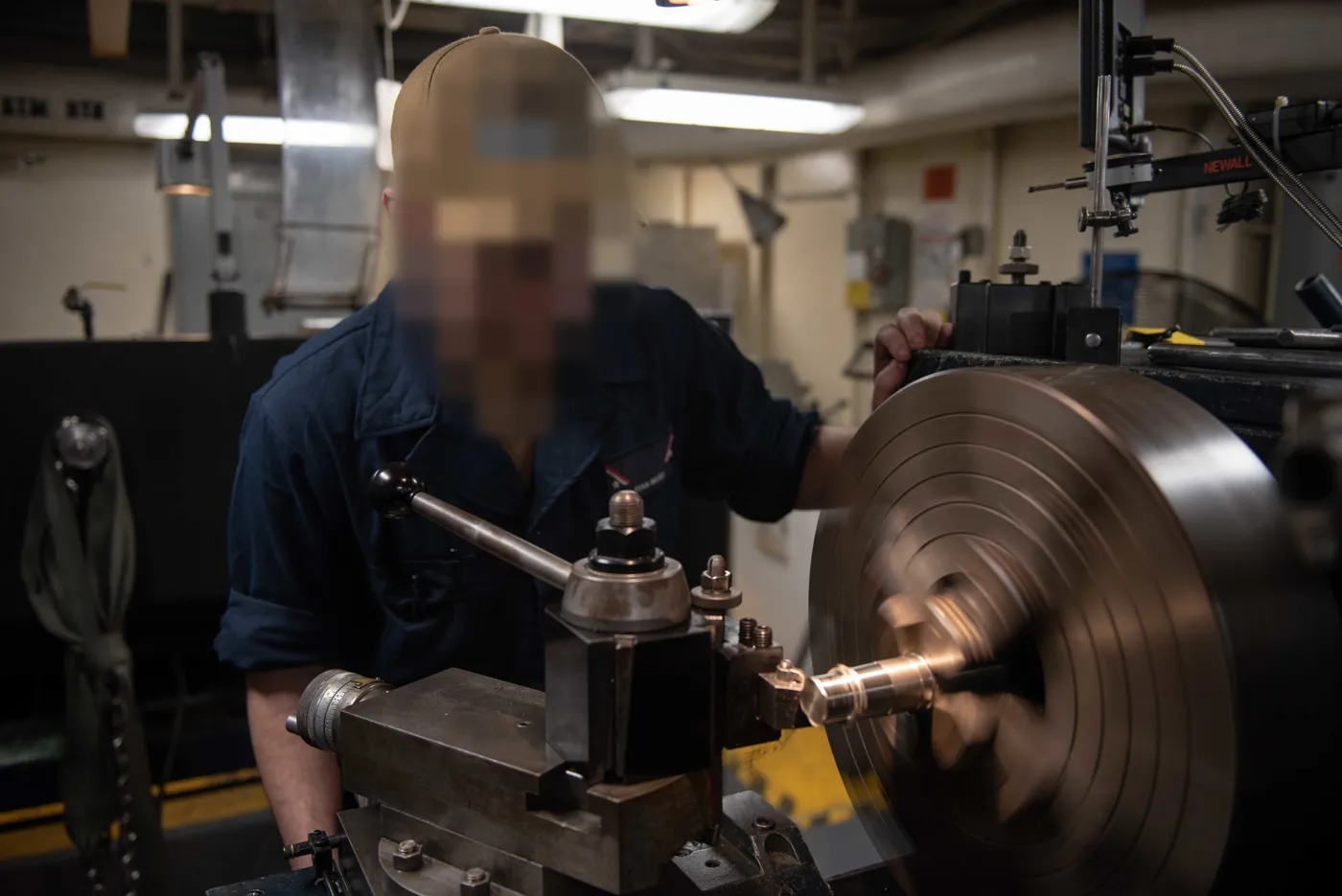
- 6 modules
- 16 pages
- about 15 minutes
For people who run or maintain machines: recognize the hazards that must be guarded, know what a proper guard does, spot unguarded belts, pulleys, gears, chains and shafts within 7 feet of the floor, and follow the care rules for power-transmission equipment.
What this certificate covers
This certificate records completion of awareness training based on OSHA 29 CFR 1910.212 and 1910.219. It is not an OSHA card or license. Those sections set machine guarding requirements and do not contain a training requirement, and this course does not cover lockout/tagout or the machine-specific standards for presses, saws and grinders. Follow your employer's procedures and instructions for the machines at your workplace.
Want to submit a review? Login and enrolled
What you will learn
- Recognize the machine hazards that must be guarded
- Check that a guard is doing its job before you run the machine
- Spot belts, pulleys, gears, chains and shafts that are missing required guards
- Follow the care rules for power-transmission equipment, including oiling
What you get
- About 15 minutes, on your phone or computer, read out loud as you go
- 1 short real-footage video showing it done right
- Real photos, not cartoons
- A hands-on drill: you make the calls, step by step, and see what happens
- 5 quick checks along the way, then a final quiz
- A certificate with a QR code your employer can check online
- A wallet card you can print and carry
- A printable study guide (PDF)
- A hands-on checklist your supervisor signs off (PDF)
Training a crew? Add your workers, see who finished, and keep every certificate in one place. Train your team →
Course highlights
Short previews of what this course covers, with the course narration. Press play.
Welcome · 50 s
Real case: an unguarded conveyor · 83 s
Belts, pulleys, gears, chains and shafts · 49 s
Course outline
- Real case: an unguarded conveyor: Caught by an unguarded belt conveyor
- Recognize the hazards
- What a proper guard does
- Belts, pulleys, gears, chains and shafts: Damaged parts and projections
- Care and oiling
- On the job
Why it matters
Source: OSHA enforcement data, refreshed after each sync.
Questions
What does Machine Guarding for Operators and Maintenance Workers cover?
You will be able to: recognize the machine hazards that must be guarded; check that a guard is doing its job before you run the machine; spot belts, pulleys, gears, chains and shafts that are missing required guards; follow the care rules for power-transmission equipment, including oiling.
Who is this course for?
It is written for workers and maintenance staff.
How long does it take?
About 15 minutes, on a phone or a computer. You can stop and pick up where you left off.
Do I get a certificate?
Yes. Score 80% or better on the final quiz and you get a certificate with a code your employer can check.
Which OSHA rule is it based on?
Based on OSHA 29 CFR 1910.212 (general requirements for all machines) and 1910.219 (mechanical power-transmission apparatus), general industry. It is awareness training: it is not an OSHA card, and your employer still has to train you on their own equipment and plan.
Course facts
- Who it is for: Workers and maintenance staff
- Trainer: Marc Harvey, Site Safety Officer (OSHA 30, CPR, USACE CQM)
- Time: about 15 minutes, on your phone or computer
- Final quiz pass mark: 80%, with a certificate employers can verify
- Based on OSHA 29 CFR 1910.212 (general requirements for all machines) and 1910.219 (mechanical power-transmission apparatus), general industry (official text)
- Printable study guide (PDF) with the key points and practice questions, included with the course
- Answer key with OSHA citations for trainers (trainer plans)
Facts checked word for word against the official text (3 sources)
29 CFR 1910.212; 29 CFR 1910.219; MI FACE report 08MI003 (2009)
Part of The Dojo — OSHA Safety Training Academy
Included from Blue Belt up ($25/month), with every other course in the Dojo.
Get your Blue BeltCompare beltsRead the free guide — what the rule requires, in plain words.