
Scaffold Inspection Checklist: What the Competent Person Checks Every Shift
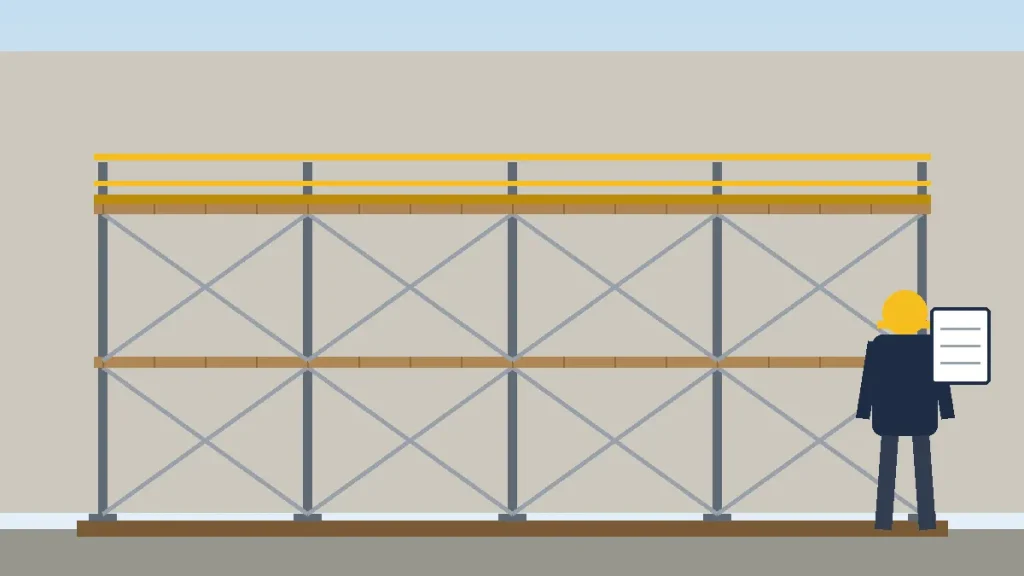
OSHA’s scaffold rule says a competent person must check each scaffold for visible defects before each work shift. It must be checked again after anything that could hurt its strength, like a truck bump or a storm.
Here is a simple checklist you can use on your walk.
Who does the check
A competent person does it. That is someone who can spot hazards and has the power to fix them right away. A worker who only uses the scaffold cannot sign off for the crew.
The every-shift checklist
1. Footing and base
- Base plates on every leg
- Mud sills under the base plates on soft ground
- No blocks, bricks or boxes holding up a leg
- Ground not washed out or sinking
2. Frames and braces
- Frames plumb and level
- Cross braces in place and locked
- No bent, cracked or rusted parts
- Ties to the building in place when the scaffold is tall for its base. The rule calls for ties or guys when the height is more than four times the base width.
3. Platforms
- Fully planked, with gaps of no more than 1 inch in most spots
- At least 18 inches wide on most platforms
- Planks not cracked, split or warped
- Planks secured so they cannot slide or kick up
4. Guardrails and fall protection
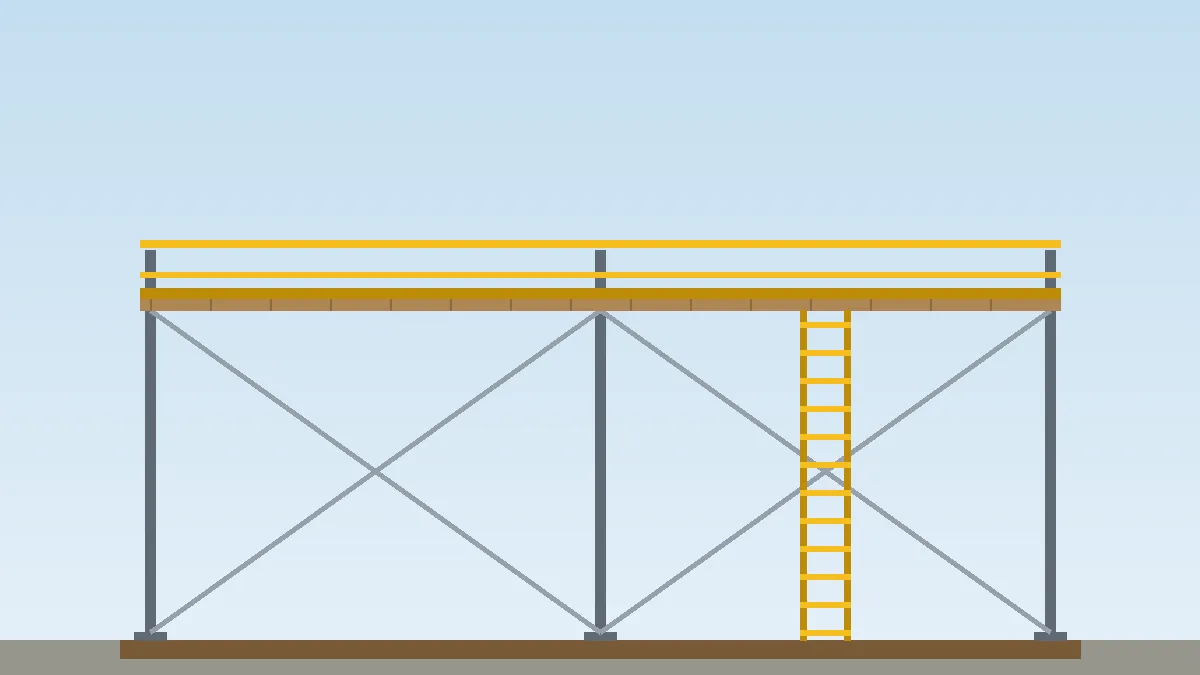
- Guardrails on open sides when the platform is more than 10 feet up
- Top rail between 38 and 45 inches on most newer scaffolds
- Midrails and toeboards in place
- Tie-off points ready if workers use harnesses instead
Not sure you count as the competent person? Our Scaffold Competent Person course covers the inspection, the loads and when to tag a scaffold out. It is part of The Dojo, our full course library.
5. Access
- A ladder, stair tower or ramp when the platform is more than 2 feet above or below the access point
- No one climbing the cross braces
6. Loads and housekeeping
- Materials stacked within the load the scaffold is built for. Each scaffold must hold its own weight and at least 4 times the most it is meant to carry.
- Platforms clear of trash, tools and slippery spots
- Toeboards, screens or netting where tools could fall on people below
If something fails
Tag the scaffold so no one uses it. Fix it under the direction of the competent person. Only then remove the tag. Write down what you found and what you fixed.
Train the person who does the check
Our free scaffold safety guide covers the rule for workers. The person who signs off needs more.
Start the Scaffold Competent Person course or train your whole team.
About this checklist
This checklist is a plain-language aid, not a copy of the rule. Some scaffold types have their own extra rules. Black Belt Safety is not part of OSHA. The regulation text is what counts.
Sources
- 29 CFR 1926.451 General requirements (scaffolds) – eCFR, National Archives, checked 2026-10-16
- 29 CFR 1926.454 Training requirements (scaffolds) – eCFR, National Archives, checked 2026-10-16
- Top 10 Most Frequently Cited Standards – Occupational Safety and Health Administration, checked 2026-10-16
Frequently asked questions
Who can inspect a scaffold?
A competent person, meaning someone who can spot hazards and has the power to fix them right away.
How often does a scaffold need to be inspected?
Before each work shift, and again after anything that could hurt its strength.
How wide must a scaffold platform be?
Most platforms must be at least 18 inches wide.
What should you do if a scaffold fails inspection?
Tag it so no one uses it, fix it under the direction of the competent person, then remove the tag and write down what you fixed.