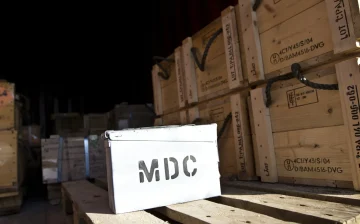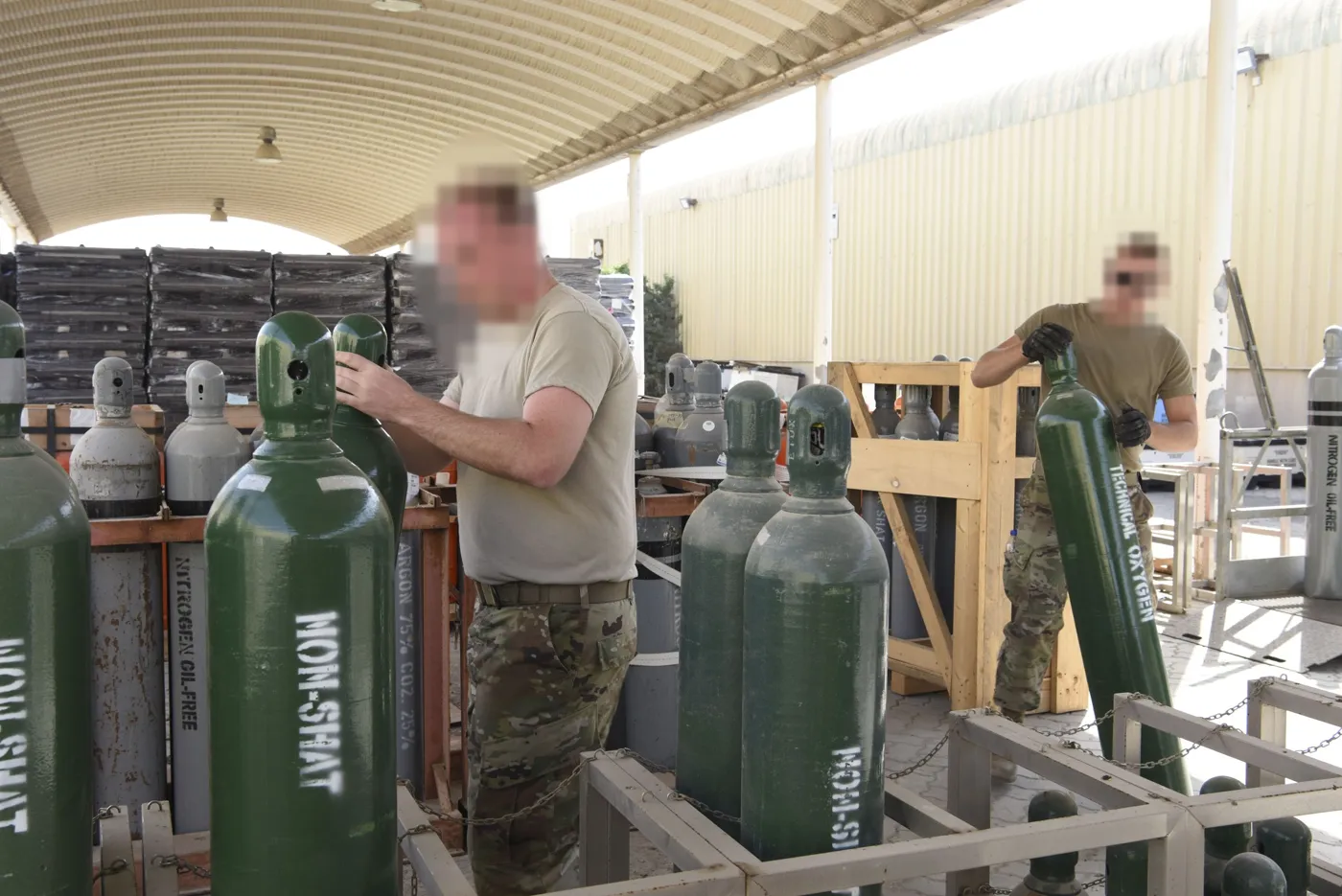
- 6 modules
- 17 pages
- about 20 minutes
For workers who move, store and use compressed gas cylinders, especially oxygen and fuel gas for welding and cutting: move and store cylinders safely, place them away from heat and electricity, open and connect them correctly, handle leaks, and check hose and torches.
What this certificate covers
This certificate records completion of awareness training based on OSHA 29 CFR 1926.350(a), (b), (c), (d), (f), (g), (h) and (i), and 29 CFR 1910.101(a). It is not an OSHA card or license, and it does not by itself meet the instruction requirement of 29 CFR 1926.350(d). Your employer must still thoroughly instruct employees in the safe use of fuel gas as 1926.350(d) sets out. 29 CFR 1910.101 has no training paragraph; under 1910.101(a) your employer must determine that compressed gas cylinders under its control are in a safe condition to the extent that can be determined by visual inspection, with visual and other inspections conducted as 1910.101(a) prescribes.
¿Quieres enviar una reseña? Acceso y se matriculó
What you will learn
- Move and hoist cylinders the safe way
- Store cylinders in the right place, with oxygen kept apart from fuel gas
- Place cylinders at the work so heat, sparks and electricity cannot reach them, and keep damaged cylinders out of use
- Open, connect and shut off a fuel gas cylinder, and respond to a leak
- Check hose and torches each shift and keep oil and grease away from oxygen
What you get
- About 20 minutes, on your phone or computer, read out loud as you go
- Real photos, not cartoons
- A hands-on drill: you make the calls, step by step, and see what happens
- 5 quick checks along the way, then a final quiz
- A certificate with a QR code your employer can check online
- A wallet card you can print and carry
- A printable study guide (PDF)
Training a crew? Add your workers, see who finished, and keep every certificate in one place. Train your team →
Course outline
- Moving cylinders: Caps on, valves closed, cylinders upright
- Storing cylinders: Where cylinders are kept
- At the work: Keep cylinders away from heat, sparks and current; Damaged cylinders stay out of use
- Opening, connecting and leaks: Crack, open slowly, close before you disconnect; When a fuel gas cylinder leaks
- Hose, torches and oil: Check it every shift
- On the job
Why it matters
Source: OSHA enforcement data, refreshed after each sync.
Questions
What does Compressed Gas Cylinder Safety cover?
You will be able to: move and hoist cylinders the safe way; store cylinders in the right place, with oxygen kept apart from fuel gas; place cylinders at the work so heat, sparks and electricity cannot reach them, and keep damaged cylinders out of use; open, connect and shut off a fuel gas cylinder, and respond to a leak; check hose and torches each shift and keep oil and grease away from oxygen.
Who is this course for?
It is written for workers.
How long does it take?
About 20 minutes, on a phone or a computer. You can stop and pick up where you left off.
Do I get a certificate?
Yes. Score 80% or better on the final quiz and you get a certificate with a code your employer can check.
Which OSHA rule is it based on?
Based on OSHA 29 CFR 1926.350 (construction gas welding and cutting) and 29 CFR 1910.101 (general industry compressed gases). It is awareness training: it is not an OSHA card, and your employer still has to train you on their own equipment and plan.
Course facts
- Who it is for: Workers
- Trainer: Marc Harvey, Site Safety Officer (OSHA 30, CPR, USACE CQM)
- Time: about 20 minutes, on your phone or computer
- Final quiz pass mark: 80%, with a certificate employers can verify
- Based on OSHA 29 CFR 1926.350 (construction gas welding and cutting) and 29 CFR 1910.101 (general industry compressed gases) (official text)
- Printable study guide (PDF) with the key points and practice questions, included with the course
- Answer key with OSHA citations for trainers (trainer plans)
Facts checked word for word against the official text (3 sources)
29 CFR 1926.350; 29 CFR 1910.101; 29 CFR 1910.253
Parte de The Dojo — Academia de Capacitación en Seguridad de OSHA
Included from Blue Belt up ($25/month), with every other course in the Dojo.
¡Consigue tu cinturón azul!Comparar cinturonesLea la guía gratuita — lo que exige la norma, en palabras sencillas.