
Why Rope Is Better Than Tape for Barricades
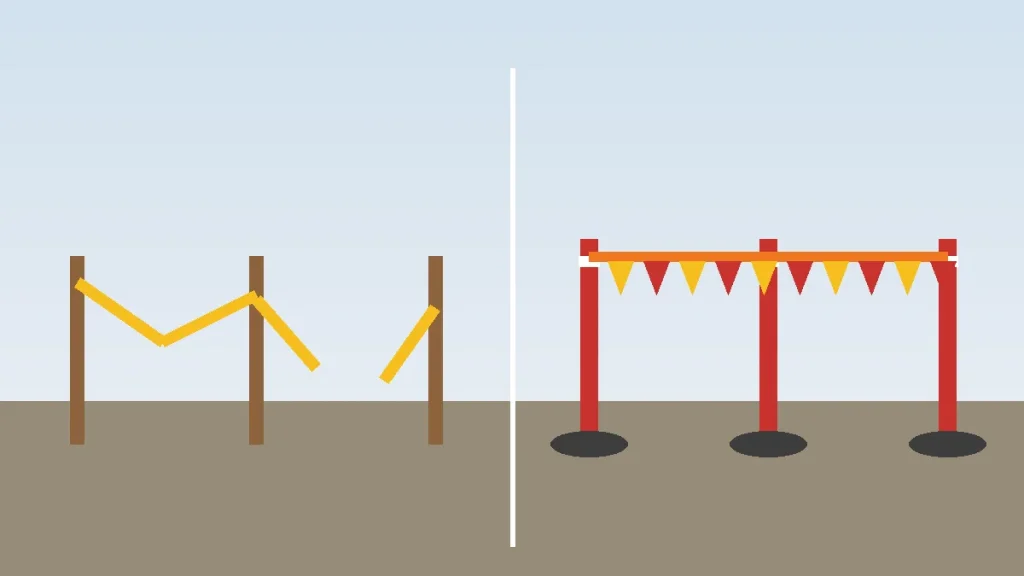
Caution tape is cheap and easy to find. You see it on almost every job. But thin tape can tear, sag, or blow down. Rope is strong and stays up. This post shows what OSHA says about lines and barriers. It also shows why many sites pick rope.
The Big Hazard Is a Fall
Most barricades on a job site keep people away from an edge, a hole, or a crane. The worst of these is a fall to a lower level. If you lead a crew near edges, our fall protection course for competent persons explains the rules in plain words.
Here is the key point. A line of tape or rope only warns people. It does not stop a fall.
OSHA says a worker near a hole that is more than 6 feet above a lower level must be kept safe one of three ways. The hole gets a cover, a guardrail around it, or the worker wears a personal fall arrest system. A warning line by itself is not on that list. The same 6 foot rule covers open sides and edges. There the choices are guardrails, safety nets, or fall arrest.
What OSHA Says About Rope and Tape
OSHA names what each kind of line can be made of. The words are not the same for each one, so read them closely.
Warning lines. These are used on roofs. OSHA says they must be made of rope, wire, or chain. Tape is not on that list. The line must be flagged at least every 6 feet with bright, easy to see material. It must hold at least 500 pounds of pull. Its low point must be at least 34 inches high, and its high point no more than 39 inches.
Control lines. These mark a controlled access zone, an area where only certain workers may go. Here OSHA does allow rope, wire, tape, or the same kind of thing. Each line must be flagged or clearly marked at least every 6 feet. Each must hold at least 200 pounds before it breaks. The line sits between 39 and 45 inches high.
Guardrails. A guardrail must hold at least 200 pounds of force without failing. The top rail sits about 42 inches high, give or take 3 inches. Rope can be used as a top rail or mid rail. OSHA says that rope must be checked as often as needed to be sure it is still strong enough. Steel or plastic banding may not be used as rails.
Crane swing areas. The back of a crane can swing around and hit or crush a worker. OSHA says the employer must put up control lines, warning lines, railings, or similar barriers to mark that area. Signs and paint on the crane are allowed only when a barrier will not work there.
So rope fits every one of these jobs. Tape fits only some of them.
Why Rope Works Better in the Field
Some reasons are common sense, not OSHA rules. Many companies put them in their own site rules.
- Strength. OSHA sets pull limits of 200 or 500 pounds for some lines. Rope comes with a strength rating you can check. Most caution tape does not, so check the label before you count on it.
- Flags and signs. OSHA wants many lines flagged every 6 feet. A tight rope holds flags and signs in place.
- Reuse. Rope can be coiled, stored dry, and used again. Check it for cuts and wear first.
How to Set Up a Rope Barricade
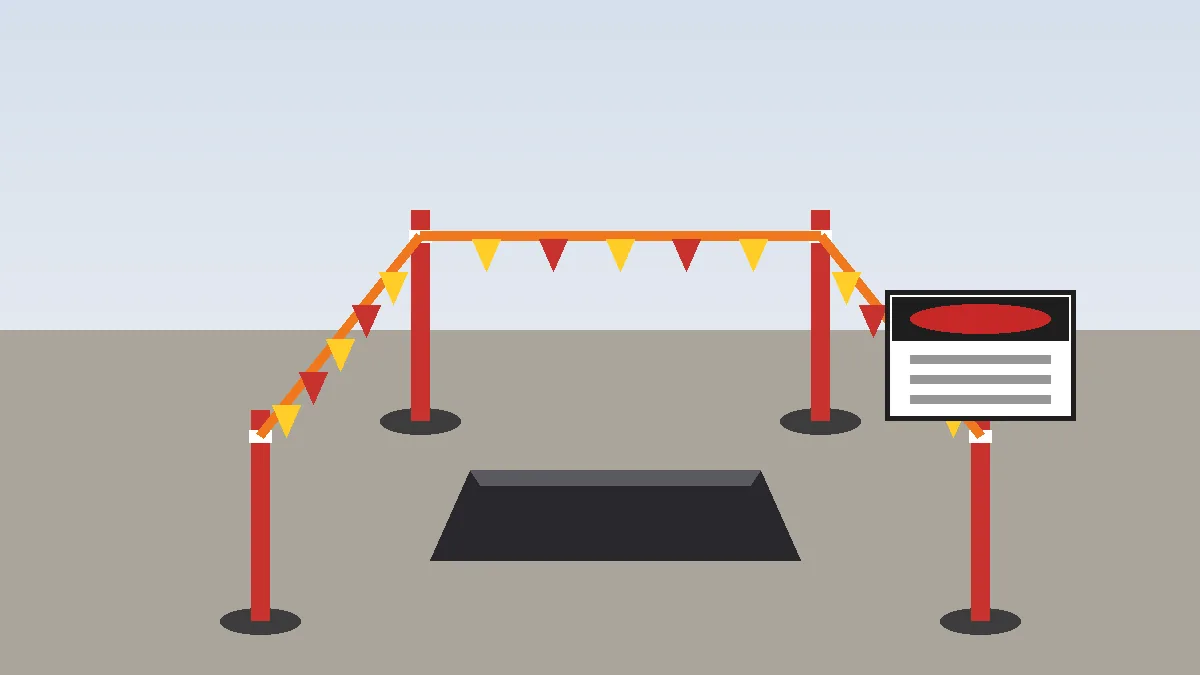
- Name the hazard. Ask if the barricade must stop a fall or just warn people. If someone could fall 6 feet or more through a hole or off an edge, a line is not enough. Use a cover, a guardrail, or fall arrest.
- Set the posts. Make them firm. For roof warning lines, OSHA says each post must not tip over when pushed sideways with 16 pounds, 30 inches above the floor.
- Pull the rope tight. Set it at the right height for the type of line.
- Hang flags. Put them at least every 6 feet.
- Add a sign. OSHA says danger signs are only for a hazard that is there right now. Caution signs warn about a hazard that might happen. Danger signs are mostly red. Caution signs are mostly yellow.
- Check it often. Look for slack, cuts, and missing flags. Many sites check every shift. That is company policy, not an OSHA rule.
Rule or Policy?
OSHA does not say rope always beats tape. Tape is allowed for control lines. Some sites use red line for danger and yellow line for caution. That color plan is company policy. We did not find it in the OSHA rules we checked. A rule to use rope for every barricade is also company policy. It is a good one, because rope meets more of the OSHA rules than tape does.
Train Your Crew Before They Rope Off a Hazard
A barricade only works if the person who builds it knows the rules. Get your supervisors trained with Black Belt Safety online courses. Start with our fall protection course for competent persons and learn when a line is enough and when you need a guardrail, a cover, or fall arrest. Visit blackbeltsafety.com to sign up today.
Sources
- 29 CFR 1926.501, Duty to have fall protection, Occupational Safety and Health Administration. Checked 2026-10-16.
- 29 CFR 1926.502, Fall protection systems criteria and practices, Occupational Safety and Health Administration. Checked 2026-10-16.
- 29 CFR 1926.1424, Work area control, Occupational Safety and Health Administration. Checked 2026-10-16.
- 29 CFR 1926.200, Accident prevention signs and tags, Occupational Safety and Health Administration. Checked 2026-10-16.
Frequently asked questions
Does OSHA allow caution tape for barricades?
Tape is allowed for control lines in a controlled access zone. It is not on the list for roof warning lines, which must be rope, wire or chain.
Is a rope line enough around a floor hole?
No. For a hole more than 6 feet above a lower level, OSHA requires a cover, a guardrail around it, or a personal fall arrest system.
How often do flags go on a warning line?
OSHA says warning lines and control lines must be flagged or clearly marked at least every 6 feet.
Is color coded rope an OSHA rule?
No. Using red line for danger and yellow line for caution is company policy. OSHA sets colors for danger and caution signs.